
By analysing soils, air, water, and natural hazards, we help guide sound engineering decisions, support safe construction and protect the environment
Our integrated methodology spans the entire project lifecycle, from initial feasibility assessments to long-term environmental monitoring. By combining survey, laboratory testing, and advanced modelling, we ensure that each phase is grounded in data, science, and engineering precision. This holistic approach allows us to evaluate project viability, anticipate challenges, and deliver resilient, sustainable solutions tailored to complex environments in offshore, nearshore and onshore contexts.
Integration is our professional mantra. Our team of more than 120 experts across 5 countries analyses multiple data sources to determine whether each development is technically sound, financially viable, and environmentally responsible.
We begin by examining site-specific or publicly available datasets, assessing soil and rock properties, metocean conditions, and identifying geohazards such as landslides, slope instabilities, or liquefaction. When dedicated surveys are required, our specialists are on board to support the acquisition of geophysical data, evaluate soil conditions, and ensure proper sample handling for analysis in our geotechnical laboratory.
Seismic hazard assessment also starts at this stage, enabling us to determine whether a site is suitable for development from a seismic perspective. These insights seamlessly transition into the design phase, guiding seismic load definition, foundation design, and ensuring overall resilience against earthquake risks.
In parallel, we develop the site’s ground model, delivering a comprehensive understanding of subsurface conditions, enhanced through digital tools and near real-time visualization.
At the same time, we lead or support Environmental and Social Impact Assessments, collecting baseline environmental data, forecasting potential impacts on air, water, soil, ecosystems, and biodiversity, and recommending mitigation measures when required.
Today, safeguarding biodiversity is not only the right thing to do; it is both a regulatory obligation and a cornerstone of responsible development.
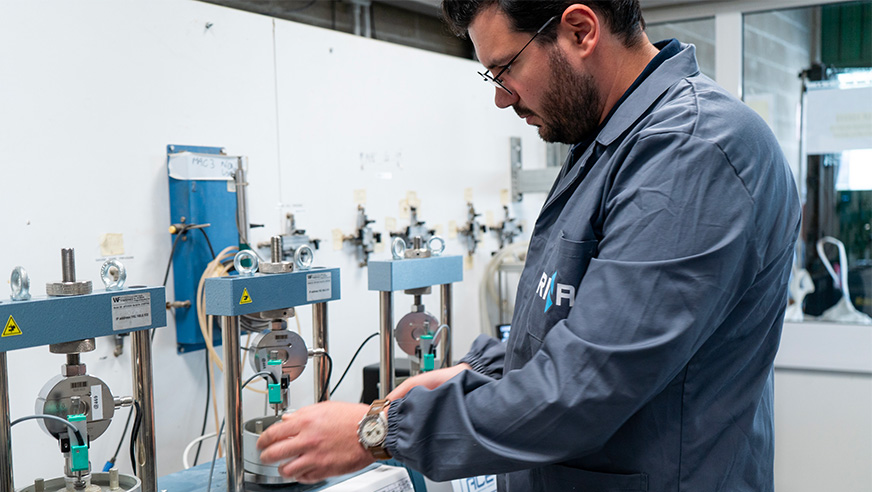
Our geotechnical engineers refine ground models using borehole data, laboratory results, and in-situ testing. Most laboratory investigations are carried out in our facility in Genoa, Italy. These models support the design of foundations, earthworks, retaining structures, and slope stabilization solutions, ensuring safety, stability, and cost-effectiveness.
Working closely with hydro engineers, we also assess water flow, drainage behaviour, and flood risks to deliver resilient and efficient infrastructure capable of withstanding environmental stresses.


